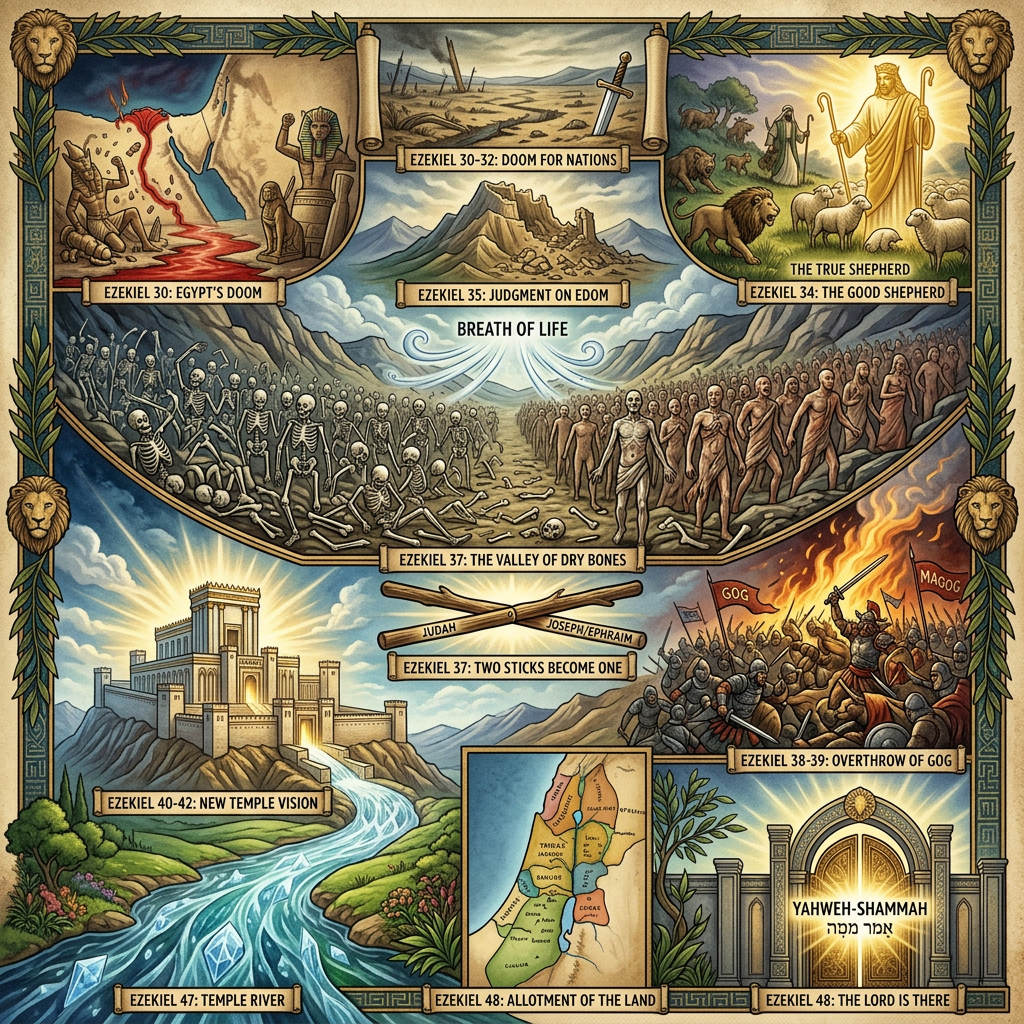
Ezekiel 30
God prophesies further judgment against Egypt and its allies. The “day of the Lord” is described as a day of doom for Egypt, where Babylon will come against them with violence and destruction. Egypt’s pride and power will collapse, and the people will be scattered among the nations.
Ezekiel 31
Pharaoh is compared to Assyria, pictured as a magnificent cedar tree that towered above the nations. Yet because of pride and arrogance, Assyria fell, and Egypt would suffer the same fate. God warns that no kingdom can exalt itself against Him.
Ezekiel 32
Ezekiel laments over Pharaoh and Egypt. Pharaoh is portrayed as a great sea monster dragged from the waters and cast down. Egypt is then pictured descending into the pit among other fallen nations, emphasizing the humiliation and finality of God’s judgment.
Ezekiel 33
Ezekiel is recommissioned as a watchman for Israel, responsible for warning the people to repent. God declares that He does not delight in the death of the wicked but desires repentance and life. News arrives that Jerusalem has fallen, confirming Ezekiel’s earlier prophecies.
Ezekiel 34
God condemns Israel’s shepherds, the leaders who exploited and neglected the people. In response, God promises to shepherd His people Himself, gathering and caring for them. He also promises to raise up “My servant David,” a future righteous shepherd and king.
Ezekiel 35
A prophecy is given against Mount Seir (Edom) because of its hatred toward Israel and its desire to seize Israel’s land. God promises judgment upon Edom for its violence and perpetual hostility.
Ezekiel 36
God promises restoration for the mountains and land of Israel. The people who were scattered among the nations will return, and the land will again become fruitful. God also promises spiritual renewal by giving His people a new heart and a new spirit.
Ezekiel 37
Ezekiel sees the vision of the valley of dry bones, symbolizing Israel’s restoration from exile and spiritual death. God breathes life into the bones, demonstrating His power to restore His people. The chapter also includes the joining of two sticks, representing the reunification of Israel and Judah under one king.
Ezekiel 38
A prophecy is given against Gog of Magog, a future enemy who will gather many nations to attack restored Israel. God declares that He Himself will intervene against Gog to display His holiness and power before all nations.
Ezekiel 39
The defeat of Gog is described in greater detail. God destroys the invading armies, and Israel spends months burying the dead and cleansing the land. Through this victory, God reveals His glory to Israel and the nations.
Ezekiel 40
Ezekiel is taken in a vision to a high mountain where he sees a future temple. A heavenly messenger measures the temple in great detail, including gates, walls, and courtyards, emphasizing holiness, order, and divine design.
Ezekiel 41
The measurements and structure of the temple itself are described, including the sanctuary and inner rooms. The beauty and symmetry of the temple reflect the perfection and holiness of God’s dwelling place.
Ezekiel 42
Additional temple chambers and sacred areas are measured. The distinction between holy and common things is emphasized, showing the importance of reverence and purity in approaching God.
Ezekiel 43
The glory of the Lord returns to the temple, reversing the earlier departure of God’s glory from Jerusalem. God declares that He will dwell among His people forever. Instructions are also given regarding the altar and sacrifices.
Ezekiel 44
The eastern gate remains shut because the Lord entered through it. Regulations are given concerning priests, especially the Levites and the sons of Zadok, emphasizing holiness and faithful service in worship.
Ezekiel 45
The land is divided into sacred portions for the temple, priests, Levites, and the prince. God commands honesty, justice, and proper worship among the people.
Ezekiel 46
Instructions are given for worship, offerings, Sabbaths, and festivals. The role and responsibilities of the prince in temple worship are also explained.
Ezekiel 47
Ezekiel sees a river flowing from the temple, growing deeper as it moves outward and bringing life wherever it flows. Trees along the river bear continual fruit and healing leaves. The chapter also outlines the boundaries of the restored land.
Ezekiel 48
The final chapter describes the division of the land among the twelve tribes of Israel. The holy district and the city are established, and the book closes with the city’s new name:
“The Lord Is There” (YHWH Shammah)
This ending emphasises God’s restored presence among His people forever.


